
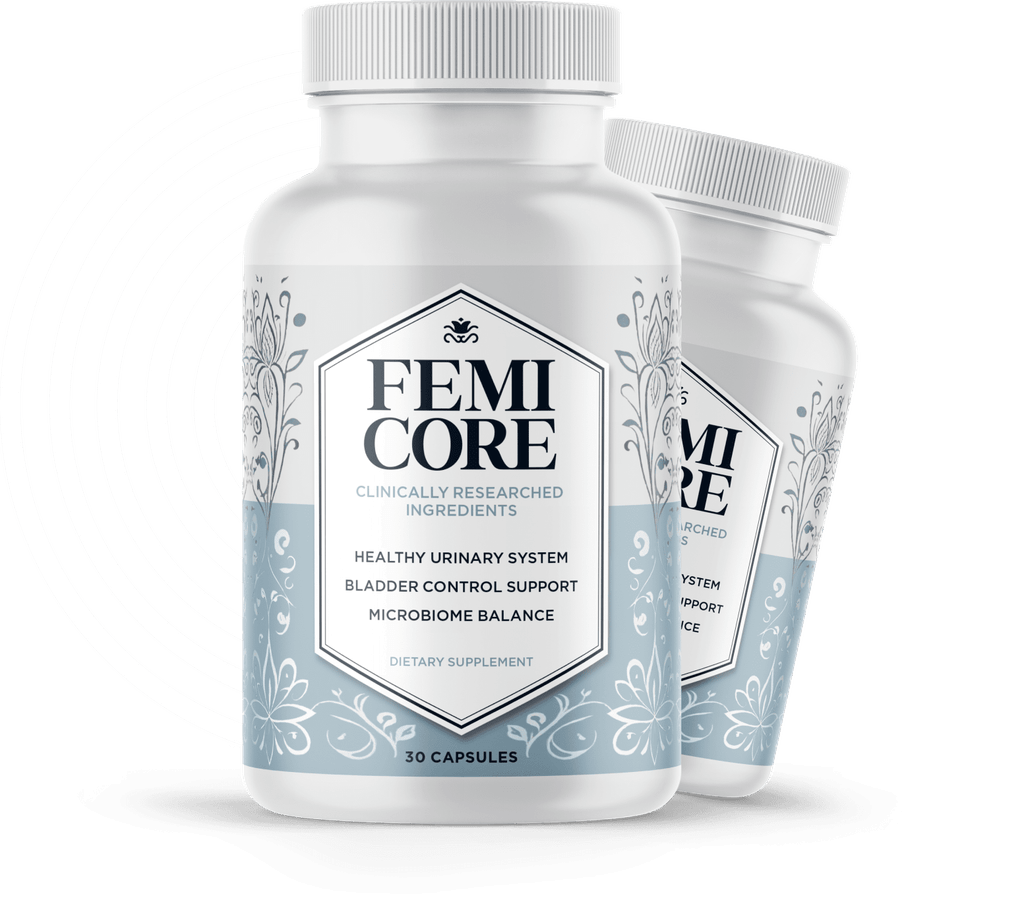
FemiCore is a dietary supplement marketed toward women who want to support bladder comfort, urinary wellness, and feminine microbiome balance. It is promoted as a convenient daily formula containing botanical ingredients and probiotic strains. But before purchasing any supplement, it is important to understand what the product contains, what its ingredients may realistically offer, and what remains unproven.
In this FemiCore review, we examine its advertised uses, ingredient information, potential advantages, possible drawbacks, safety considerations, pricing, and refund policy. We also discuss questions consumers should ask before spending money on a supplement marketed for urinary health.
Our review approach: This article is intended for informational purposes. It is not a laboratory test, clinical trial, or personal product-use report. Product information should be checked against the latest packaging and official purchase terms.
Visit Femicore Official Website
What Is FemiCore?
FemiCore is marketed as a women’s urinary wellness supplement designed to support normal bladder function and feminine health. Its promotional materials focus on issues such as urinary urgency, bladder comfort, and maintaining a healthy balance of beneficial microorganisms.
The product is sold in capsule form, with some official-looking sales pages describing a once-daily serving. However, serving instructions and formula descriptions should be confirmed on the exact product label before use.
FemiCore is a dietary supplement, not a prescription medicine. It should not be considered a proven treatment for urinary tract infections (UTIs), urinary incontinence, or other medical conditions simply because its advertising discusses those concerns.
Women experiencing recurring urinary symptoms should understand the underlying cause before relying on a supplement. Symptoms that seem minor can sometimes require medical assessment.
How Does FemiCore Claim to Work?
FemiCore’s marketing focuses on two broad areas: botanical ingredients and probiotics.
Botanical ingredients are plant-derived substances used in various wellness products. Depending on the specific ingredient and its preparation, research may explore antioxidant activity, traditional uses, or other biological effects. However, evidence about an ingredient does not automatically demonstrate that a finished supplement produces the same effect.
Probiotics are live microorganisms that may provide health benefits when the right strains are used in appropriate amounts. Different strains can have different effects, so the precise strain identity and dosage matter.
FemiCore’s promotional materials suggest that its ingredients support urinary balance and bladder comfort. These are product claims, not proof that the supplement prevents leaks, treats infections, or works for every woman.
To establish whether FemiCore itself is effective, reliable clinical research would need to test the actual finished formula against an appropriate comparison group. We could not establish that from the product marketing information reviewed for this article.
FemiCore Ingredients: What Should You Know?
Ingredient transparency is one of the most important parts of any supplement review.
Different online pages using the FemiCore name describe different ingredient combinations. One product page lists ingredients such as Mimosa pudica, cranberry extract, bearberry, berberine, and several Lactobacillus strains. Another page describes D-mannose, hibiscus flower extract, buchu leaf, and uva ursi.
These descriptions do not establish that every listed ingredient is present in every FemiCore bottle. Consumers should check the current Supplement Facts panel on the exact product they intend to buy.
Here is a general explanation of some ingredients mentioned in FemiCore marketing.
1. Cranberry Extract
Cranberry is commonly included in products marketed for urinary wellness. It contains compounds called proanthocyanidins, although the amount and type can vary between preparations.
Some research has examined cranberry products for preventing recurrent UTIs in certain populations. The evidence depends on the formulation and the people studied, and cranberry should not be treated as a cure for an existing infection.
If FemiCore contains cranberry extract, check whether the label specifies the amount, standardization, and other relevant product details.
2. D-Mannose
D-mannose is a type of sugar found naturally in small amounts in some foods. It has been studied for its possible role in urinary tract health.
However, evidence for D-mannose supplements is not conclusive, and research findings should not be interpreted as proof that every D-mannose product prevents UTIs. Its presence on a marketing page also does not confirm that it is included in the bottle you receive.
3. Bearberry (Uva Ursi)
Bearberry is a botanical ingredient traditionally associated with urinary health. It contains compounds including arbutin.
Traditional use does not guarantee safety or effectiveness, particularly for long-term use. Bearberry preparations can have important safety limitations, and they should not be used casually as a substitute for medical care. Consult a healthcare professional before using products containing this ingredient.
4. Mimosa Pudica
Mimosa pudica is a plant used in various traditional and supplement formulations. Its inclusion in a product does not establish a clinically meaningful benefit for bladder control.
Consumers should look for the plant part used, extract strength, amount per serving, and credible human research relevant to the intended use.
5. Berberine
Berberine is a naturally occurring compound found in certain plants and studied for several potential biological effects. It can interact with medications and may cause unwanted effects.
It is particularly important to check with a healthcare professional before using berberine if you take prescription medicines, have a medical condition, are pregnant, or are breastfeeding.
6. Lactobacillus Probiotic Strains
Some FemiCore product descriptions list Lactobacillus strains, including L. crispatus, L. acidophilus, L. plantarum, L. gasseri, and L. casei.
Probiotic effects are strain-specific. The presence of a bacterial species alone does not demonstrate that a formula will improve bladder symptoms. A transparent label should identify the strains, their quantities, and preferably the number of live organisms guaranteed through the end of shelf life.
Ingredient verdict: FemiCore’s advertised ingredients include substances that have been studied for different purposes, but ingredient research alone cannot prove that FemiCore delivers its advertised results. Confirm the actual formula before making a purchase.
Potential Benefits of FemiCore
FemiCore is promoted for several areas of women’s wellness. These should be understood as its intended uses rather than guaranteed outcomes.
Convenient Daily Supplement
A capsule-based product can be convenient for people who prefer a simple routine. Convenience, however, does not establish effectiveness.
Ingredients Associated With Urinary Wellness
Some ingredients appearing in FemiCore marketing have been researched in relation to urinary health or microbiome balance. The strength of evidence varies considerably by ingredient, dose, and intended outcome.
A Formula Marketed for Women
FemiCore is positioned specifically toward women seeking urinary wellness support. Even so, suitability depends on the actual ingredients, a person’s medical history, and any medicines they take.
Online Ordering and a Stated Refund Policy
The seller advertises a 60-day money-back guarantee on certain product pages. That may provide a way to request a refund, but consumers should read the current terms carefully, including deadlines, return requirements, and shipping costs.
None of these points establishes that FemiCore will stop urine leakage, prevent infections, or deliver a particular result.
Does FemiCore Really Work?
The most useful answer is that the effectiveness of the finished FemiCore product has not been established by the product descriptions alone.
To assess a supplement properly, look for independent human clinical studies on the exact formula. Ideally, the studies should explain the participant group, dosage, duration, comparison group, outcomes, and limitations.
Evidence about an individual ingredient is a starting point, not a substitute for product-specific research. A study involving one probiotic strain, for example, cannot automatically establish that a mixture of several strains produces the same result.
Be cautious of advertisements promising fast, dramatic, or universal improvements. Results from supplements can vary, and marketing testimonials are not a reliable way to estimate the likelihood of success.
If your main concern is urine leakage, frequent urgency, or repeated urinary discomfort, a healthcare professional can help identify possible causes and discuss established treatment options.
FemiCore Complaints and Possible Drawbacks
Before buying FemiCore, consider several questions that may affect your experience.
1. Inconsistent Ingredient Descriptions
Online pages using the FemiCore name do not all provide the same ingredient list. This makes it important to verify the exact product and seller rather than relying on a general description.
2. Limited Product-Specific Evidence
Promotional statements and customer stories are not equivalent to controlled clinical trials. If independent studies on the finished formula are unavailable, its actual effectiveness remains uncertain.
3. Possible Side Effects and Interactions
Natural ingredients are not automatically harmless. Botanicals and probiotics can cause unwanted effects, and some ingredients may interact with medication or be unsuitable for particular health conditions.
4. Promotional Pricing
A discount from a displayed original price does not necessarily prove that a product offers good value. Compare the final checkout total, quantity, shipping costs, serving size, and refund terms.
5. Refund Conditions
A money-back guarantee may require contacting customer service within a specific period and returning bottles or supplying proof of purchase. Review these conditions before ordering and keep your receipt and order confirmation.
These are practical concerns to verify, not claims that every FemiCore customer has experienced a problem.
Is FemiCore Safe to Use?
Safety depends on the exact formula, serving size, product quality, and the person taking it. We cannot confirm that FemiCore is suitable for everyone from the information available in its marketing.
Before starting FemiCore, consult a qualified healthcare professional if you:
- Are pregnant, planning a pregnancy, or breastfeeding.
- Take prescription medicines or several supplements.
- Have kidney, liver, or other ongoing medical conditions.
- Have allergies or have previously reacted to herbal products.
- Experience persistent or recurring urinary symptoms.
Do not exceed the directions on the product label. Stop taking the supplement and seek medical advice if you experience a concerning reaction.
Important: Burning during urination, blood in the urine, fever, back or side pain, or worsening urinary symptoms may require prompt medical assessment. A supplement should not delay evaluation or treatment of a possible infection.
FemiCore Price and Packages
FemiCore sales pages advertise discounted prices and multi-bottle packages, but the offers can vary between websites and may change over time.
Some pages advertise prices around $49 per bottle for larger bundles, while other packages have different per-bottle costs. These figures should be treated as examples of advertised offers, not guaranteed current prices.
Before ordering, check:
- The total amount charged at checkout.
- The number of bottles and servings included.
- Shipping, taxes, and any additional charges.
- Whether the purchase is a one-time payment or recurring order.
- The return address and refund requirements.
- Whether the seller provides a clear company name and customer support contact.
Do not choose a large bundle solely because the displayed per-bottle price is lower. If you are uncertain about the formula or its suitability, it is sensible to investigate those questions before committing to a larger purchase.
FemiCore Money-Back Guarantee
Some FemiCore sales pages advertise a 60-day money-back guarantee. However, the exact requirements may differ depending on the seller and offer.
Before buying, confirm whether the refund period begins on the purchase date or delivery date, whether empty bottles must be returned, who pays return shipping, and whether shipping charges are refundable.
Save the order confirmation, receipt, product page, and refund-policy details. If you decide to request a refund, follow the instructions and deadlines provided by the seller.
A guarantee may reduce some financial risk if its terms are honored, but it does not establish that a supplement is effective, safe, or medically appropriate.
FemiCore vs. Other Women’s Wellness Supplements
When comparing FemiCore with another supplement, avoid relying only on claims such as “natural,” “advanced formula,” or “doctor recommended.”
A more useful comparison includes:
| Factor | What to check |
|---|---|
| Ingredients | Full label, amounts, and standardized extracts |
| Probiotics | Exact strains and quantity per serving |
| Research | Independent human studies relevant to the intended use |
| Safety | Warnings, interactions, and suitability |
| Price | Total cost per serving, including shipping |
| Transparency | Manufacturer details and accessible customer support |
| Refund policy | Written terms and practical return requirements |
A product with a lower price is not necessarily better, and a longer ingredient list is not necessarily more effective. Choose based on transparent labeling, relevant evidence, safety, and value.
Frequently Asked Questions About FemiCore
What is FemiCore used for?
FemiCore is marketed as a women’s urinary wellness supplement intended to support bladder comfort and feminine microbiome balance. These are advertised purposes, not proof of a medical benefit.
How long does FemiCore take to work?
There is no reliable product-specific evidence established here to predict how quickly FemiCore may work. Be skeptical of guaranteed timelines and seek medical advice for persistent symptoms.
Can FemiCore treat a urinary tract infection?
FemiCore should not be relied on to diagnose or treat a UTI. Suspected infections need appropriate medical assessment and, when indicated, treatment.
Does FemiCore have side effects?
Possible effects depend on the ingredients and individual circumstances. Herbal ingredients and probiotics may cause unwanted reactions, and some components may interact with medication. Review the label with a healthcare professional if you have concerns.
Is FemiCore FDA-approved?
Dietary supplements are not approved by the U.S. Food and Drug Administration in the same way as prescription medicines. Do not interpret claims about an FDA-registered facility as FDA approval of the product or proof that its advertised benefits are established.
Is FemiCore worth the money?
That depends on the verified formula, price, quality information, safety, and available evidence. Because the finished product’s effectiveness has not been established by marketing materials alone, consumers should carefully evaluate those factors before purchasing.
Where should I buy FemiCore?
If you decide to purchase it, verify the seller’s identity, current ingredient label, checkout total, customer service details, and written refund policy. Do not assume that similarly named websites offer identical products or terms.
Final Verdict: Should You Buy FemiCore?
FemiCore is marketed toward women seeking support for bladder comfort and urinary wellness. Its product descriptions mention botanicals and probiotic ingredients, but online descriptions are not fully consistent, and they do not establish that the finished supplement delivers the advertised results.
The main things to verify are the exact ingredient label, credible product-specific research, potential safety concerns, total price, and refund conditions. Women with recurring urinary symptoms should prioritize appropriate medical evaluation rather than relying on a supplement alone.
Our conclusion: FemiCore may interest consumers researching women’s urinary wellness products, but the evidence available from promotional information is not enough to recommend it as a proven solution for bladder leakage or urinary tract problems. Make an informed decision based on verified information and professional guidance where needed.
Visit Femicore Official Website
Medical disclaimer: This article is for general educational purposes only. It is not medical advice and does not diagnose, treat, cure, or prevent any disease. Consult a qualified healthcare professional before starting a dietary supplement, especially if you take medication, have a medical condition, are pregnant, or are breastfeeding.
Affiliate disclosure: If this article contains affiliate links, Reviews Reveal may earn a commission when a reader makes a qualifying purchase through those links, at no additional cost to the reader. Any such relationship should be disclosed clearly and honestly.
Disclosure: This article may contain sponsored content or affiliate links provided by third parties. Publication does not constitute an endorsement by Your Health Magazine.